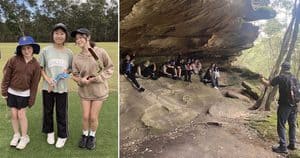
When Stage 3 students headed to Brewongle Environmental Education Centre on the Hawkesbury River at Sackville North, the trip was framed as a camp. What they came back with looked more like a crash course in Aboriginal culture, colonial history and environmental science, delivered almost entirely through doing rather than sitting and listening.
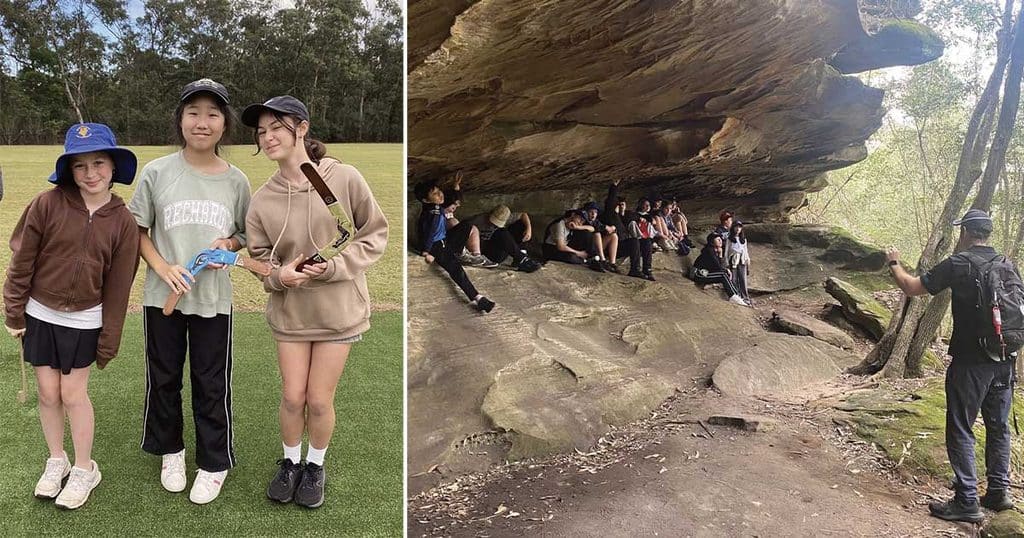
The teamwork started early, with students grouped together at the Wisdom Tree before the first activities began, and it carried through nearly everything that followed. Making ochre paint from clay and water led into a lesson on Aboriginal symbols and storytelling, with students painting echidnas, trees and grass onto their own skin as a way of understanding art that’s usually only seen from a distance.
Later sessions on gunyah building, spear throwing and boomerang throwing extended that same thread, giving students a physical sense of the skill and ingenuity behind traditional bush techniques rather than just a description of them.
The science side of the camp came through just as clearly. Fire-making asked students to generate heat using only a stick and a wooden base, and while they reached 164°C through smoke and friction alone, the 300°C needed for an actual flame stayed out of reach — a result that taught persistence and the basics of thermal science more effectively than reaching the goal would have.
Dip-netting in the camp’s pond gave students a similar hands-on introduction to ecosystems and biodiversity, collecting real aquatic samples from the water in front of them, one student rather more thoroughly soaked than the rest after an unplanned dip of his own.
History got its turn on the final day. Brewongle teacher Tom led the group through a recreated 1878 classroom, having them write with pen and ink under the kind of strict discipline that defined schooling well over a century ago. For students used to laptops and second chances, it was a fast, tangible way to understand how much education has shifted over time.
Camps like this tend to be remembered for the fun of them, and this one had plenty. But what stood out was how much of the learning came without a textbook in sight — culture, science, and history, all picked up with hands in the clay, the water, and the ash.