By Hornsby Councillor Nathan Tilbury
As we approach the bicentenary of the river crossing at Wisemans Ferry (1827 – 2027) it is fascinating to look back and debunk a few of the long-standing myths associated with the area.
There are myths regarding two separate sandstone overhangs (caves) in Wisemans Ferry, that have attracted tourism to the area for over a century.
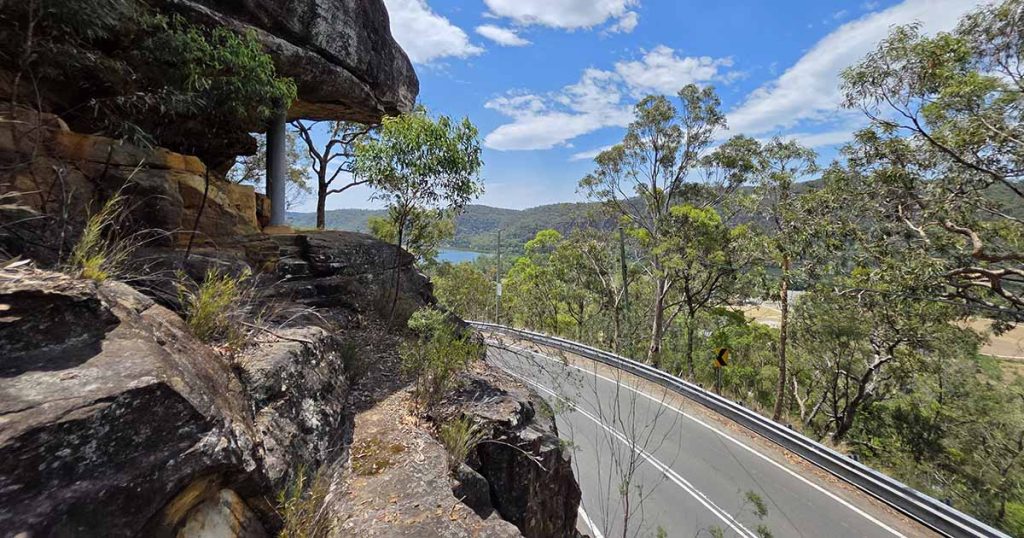
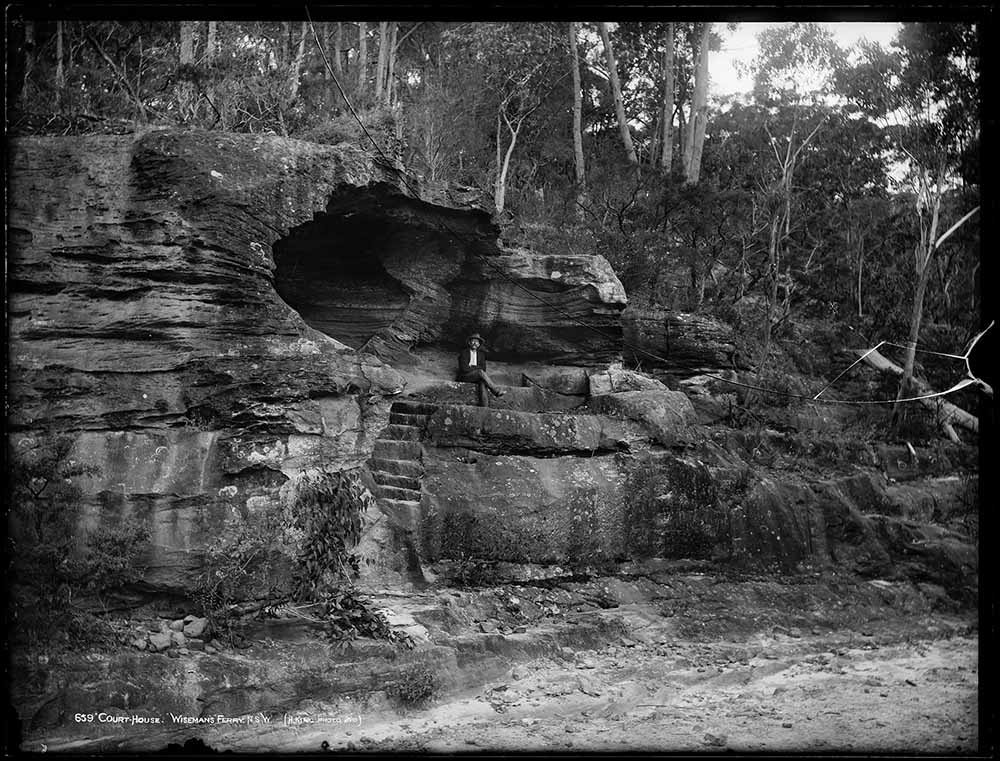
One, that is known as “Courthouse Cave”, is located on the hill on the southern side of the river, just above Old Northern Road, as the road is in its final descent towards the village of Wisemans Ferry. Steps have been cut into the sandstone, and these provide easy access between the road and the cave. Basic seating has also been hewn into the stone for cave visitors. This overhang has also been referred to as “Capel Cave”.
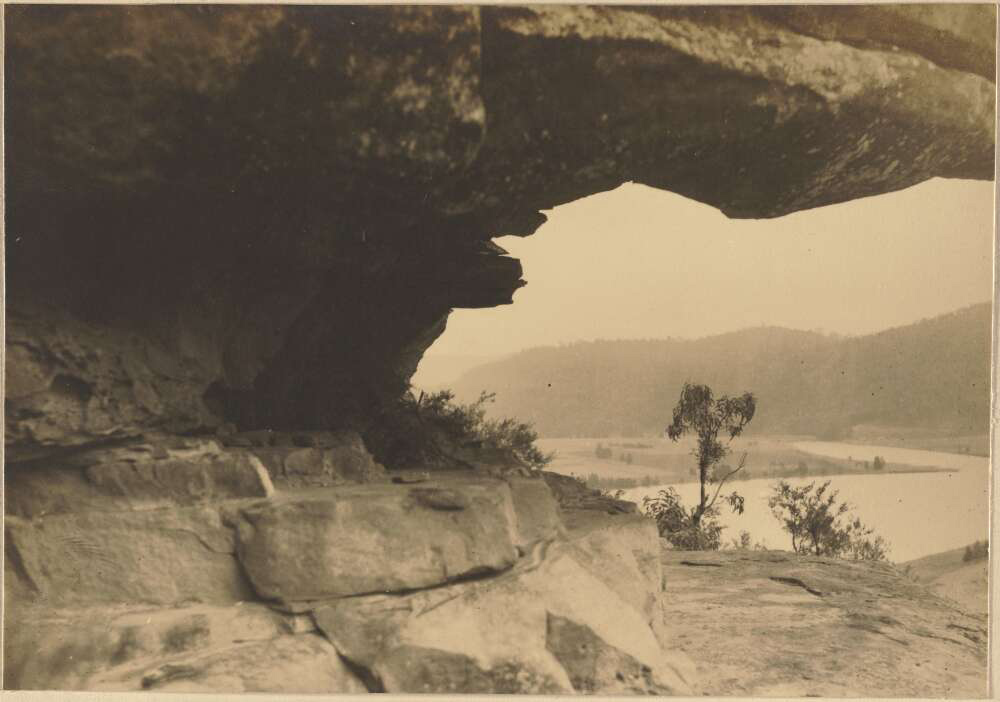
Despite its names, there are no records that suggest the cave was ever used for anything other than providing visitors with a magnificent view over the village and down to the Hawkesbury River. This view is still available although, today, it is impeded by the regrowth of the surrounding vegetation, and it can be hazardous to approach as the road is considerably busier.
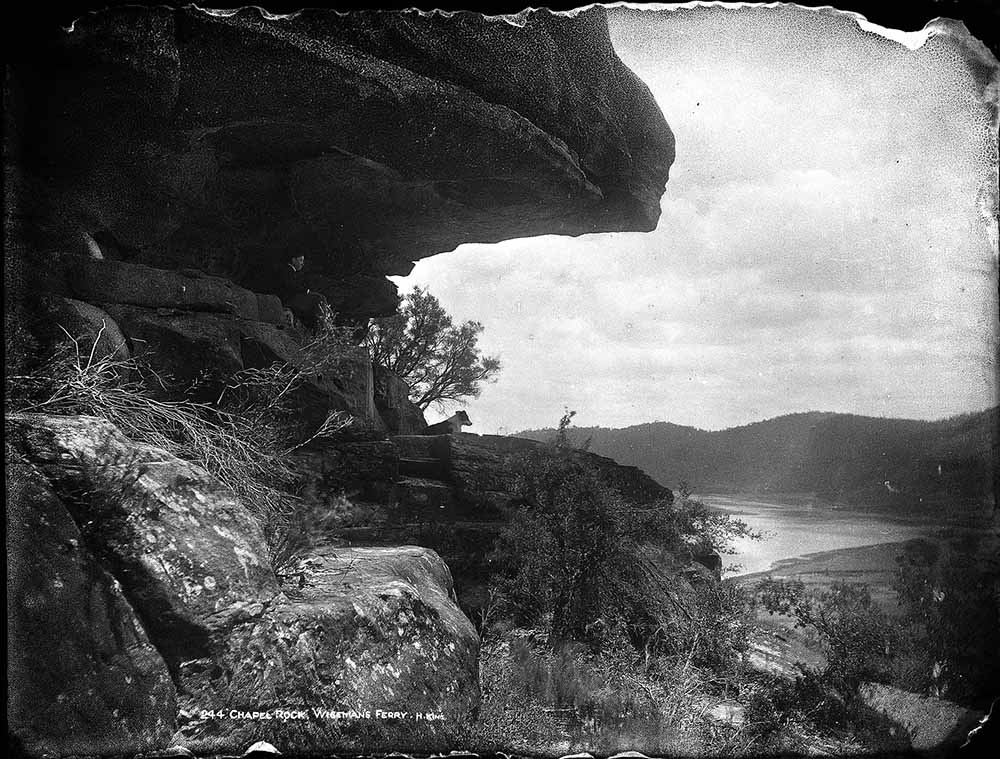
This overhang is now supported by a large steel column to reduce the risk of collapse.
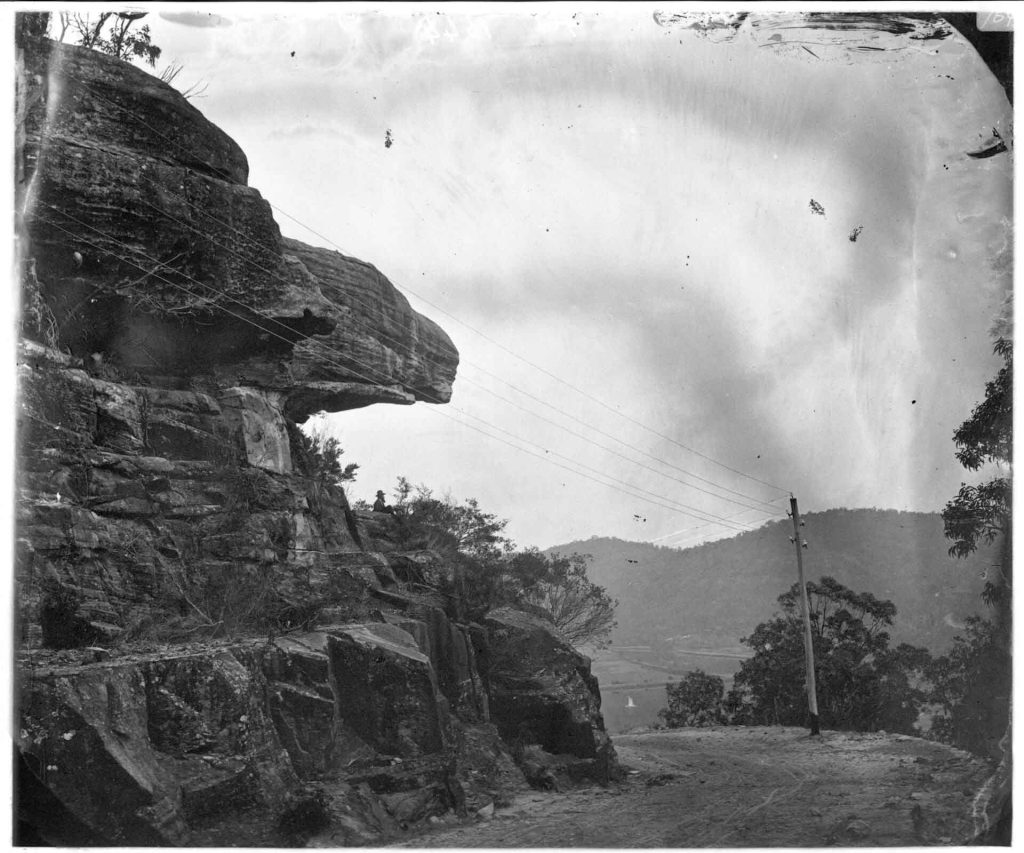
The second well-known cave in the area is located on the opposite and northern side of the river. It is best known as “Hangman’s Cave” and is located along the Old Great North Road on Devines Hill, which, today, is part of the Convict Trail. This site is sometimes also referred to as “Courthouse Rock” and this can cause some confusion with the first site mentioned in this article “Courthouse Cave”.
Just like the cave on the opposite side of the river, “Hangman’s Cave” has well-made steps that have been cut into the stone and a carved stone bench for seating. It has a natural feature in the cave’s roof being a circular hole large enough for someone to fall through and this is the main reason for the site’s fame.
The stories about this cave suggest that reoffending convicts or bushrangers were formally tried by the magistrate on site and, if found guilty, sentenced for execution. The condemned man would then be immediately taken to the top of the rock and hung through the hole in the cave.
This is, of course, pure myth, but it does make for a great story.
Recently, the remains of a long-forgotten, convict-built building were discovered on Hornsby Council’s land at Wisemans Ferry. It is believed that these ruins are of the real court house, office and residence of Percy Simpson, the Surveyor/Magistrate, in charge of constructing the Great North Road through Wisemans Ferry, between the years 1826 and 1832.
Further studies are being undertaken on this site to piece together its history and the results will be revealed in the near future.
A visit Wisemans Ferry is always very enjoyable and sure to take your imagination back to our convict days, even if some of the stories of the area are a little too colourful to be true.
The Wisemans Ferry Bicentenary Committee is currently in the early stages of collating historical information and planning a range of activities to mark this special occasion.
For enquiries or to share your ideas, you can contact: [email protected]
With collaborative support from the community and various levels of government, the Wisemans Ferry river crossing 200-year celebration promises to be memorable, showcasing the area’s rich heritage and the strength of the unique riverside community.