By Carly Paton
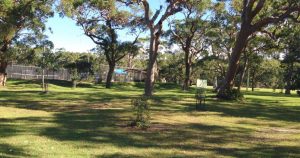
At 7:50am each Saturday, long before the rest of Galston has fully woken, Fagan Park is already alive. Runners make their way to the start line, stretching and stumbling. Dog leads rattle. Volunteers in bright vests adjust signs and check their watches and just before the countdown begins, someone inevitably makes a joke about “the hill”, the infamous final climb of each lap that every regular knows all too well.
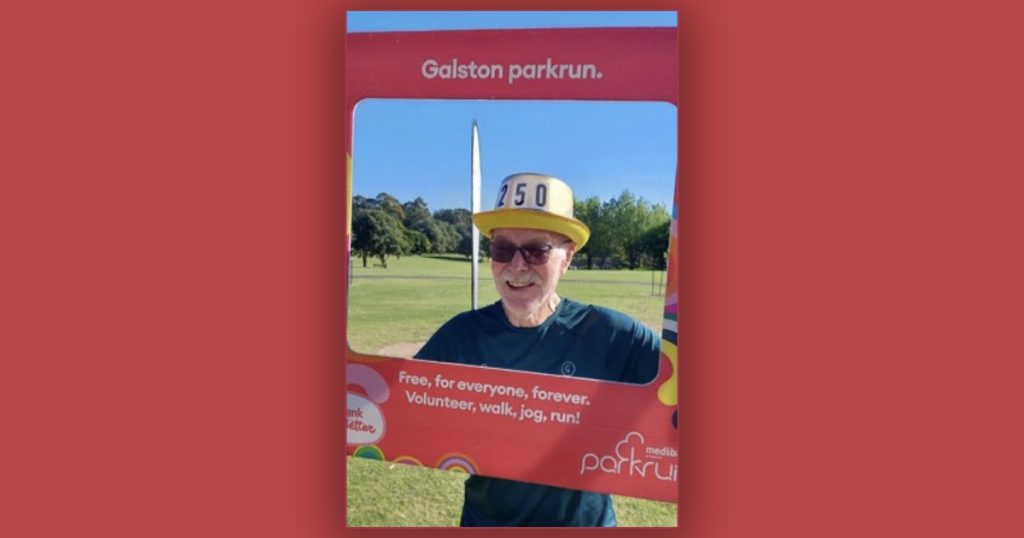
By 8am, the crowd surges forward, another Galston parkrun is underway. Galston’s weekly 5-kilometre event is one of thousands around the world, but for many locals, it is far more than a fitness routine. It is a gathering place, a place of warmth and laughter, a celebration of people at every age and stage of life. As event organiser Karen Mathie explains, one of their most inspiring regulars is a 93 year old man who recently completed his 250th run. “He is a bit of a legend” Karen says.
That “legend” is John Hayes, a man whose story has captured the attention of hearts and minds across the parkrun community. According to the parkrun Australia blog, Hayes began parkrunning at 86 and has since become a regular at Galston, forming a group known as the “Galston Strugglers”, who tackle the course together each week, encouraging each other every step of the way (parkrun Blog, 2025).His dedication is truly inspiring and proves one thing beyond doubt, it is never too late to start. Hayes embodies the very spirit parkrun was built on: community, inclusivity and joy.
Parkrun came from humble beginnings, when 13 runners gathered in Bushy Park, London, for a free timed run organised by founder Paul Sinton-Hewitt. The basic principles, free, weekly, for everyone, forever, have never changed (parkrun, 2024). What began with one event grew slowly at first, taking two years of patience and dedication before it expanded to a second location in Wimbledon. But, by 2012, the movement had gone global, reaching Australia, Denmark, Poland, South Africa and the United States (parkrun UK, 2025).
Australia’s first parkrun took place on the Gold Coast in April 2011 with 115 participants. Since then, the average finish time nationwide has grown steadily slower, from 27:42 in 2011 to 33:54 in 2021, a clear sign that more people who had never seen themselves as “runners” are taking part (parkrun Australia, 2021).
The introduction of the “tail walker” role also ensures no participant ever finishes last, replacing the old “tail runner” title to make the event more welcoming for walkers (parkrun UK, 2025). Galston joined the movement on 8 October 2016 and since then, 7,866 people have completed 57,414 runs at the site, supported by more than 620 volunteers (Galston parkrun, 2025). On 22 November 2025 alone, 192 participants took part, including 21 first-timers and 32 runners who recorded personal bests.
For many regulars, Galston’s parkrun is not just a physical challenge,it is a community anchor. I myself have completed more than fifty parkruns here, and although I’ve run events across Australia, England and Scotland, Galston remains my favourite. There is an easy friendliness here that is difficult to describe, but instantly recognisable. People who know each other greet like old friends; people who don’t know each other cheer like teammates.
And then there’s the hill. The final hill of each lap on this particular course is infamous. Almost everyone loses a small piece of their will to live each time they climb it, but that is where the best moments happen. When you’re gasping for air and ready to give up, someone running past will say, “You’ve got this!” or “Nearly there!” Those tiny, breathless words from strangers, people who understand the pain of that very hill, are sometimes enough to carry you the rest of the way.
That spirit is reflected across every aspect of the event. Volunteer rosters are filled weekly by regulars who take their roles seriously, whether timing runners, marshalling corners or pacing. On Galston parkrun’s ninth birthday for example, volunteer Lara Hardy completed her 100th volunteer milestone, placing her among the top 3% of volunteers worldwide, a testament to the commitment found in this small community (Galston parkrun Facebook, 2025).
Stories like John Hayes’s bring light to the ways in which parkrun breaks down barriers to physical activity. Hayes had never been a runner, or even a recreational walker, before joining at 86. Yet, six years later, he not only continues to walk the course but has become a leader of the Strugglers, encouraging other older participants to join him. The blog notes that he and his wife Wendy, also in her nineties with more than 200 runs, often meet the group midweek for social walks and post-parkrun breakfasts (parkrun Blog, 2025).
What parkrun offers is not competition but connection. Participants celebrate milestones, personal bests, birthdays and even bad days together. Volunteers know regulars by name. Visitors praise the warm atmosphere online. And each week, no matter the weather, the community turns up.
Galston’s parkrun may be one of 2,500 locations worldwide, but its magic lies in the people who show up: the volunteers who give their time, the families who walk together, the teenagers who sprint the finish, the retirees who outpace expectations and the locals who simply enjoy being part of something genuine. As Fagan Park empties after another Saturday run, conversations drift to next week’s event, next month’s goals.
Galston parkrun proves that community doesn’t need to be complicated, sometimes, all you need is a path, a purpose and people willing to walk it together.