By Kay Birkinshaw
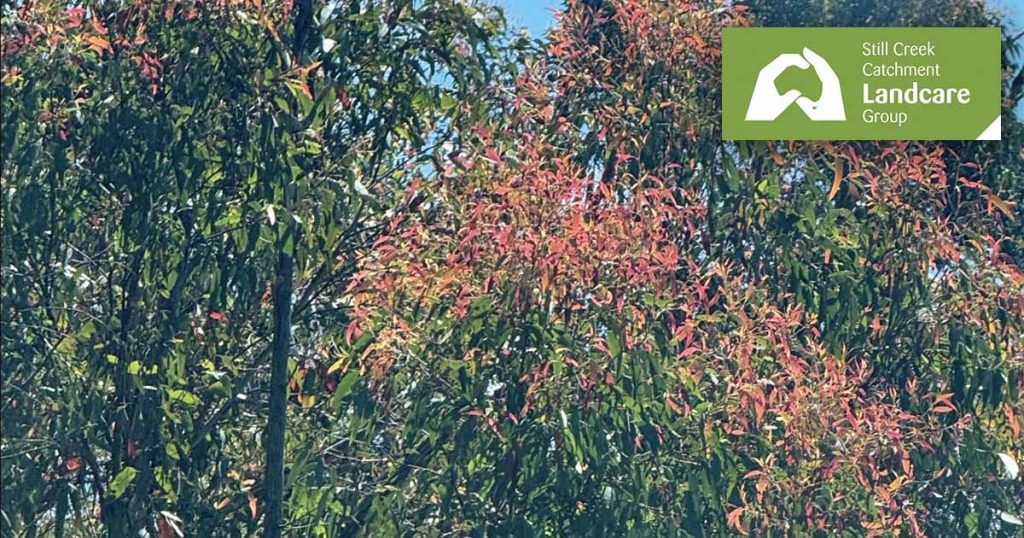
In Spring, many plants have new red leaves. In these young leaves, the photosynthesis process that makes green leaves is not mature and to protect them, a chemical called anthocyanin is present. This gives a red pigment on the leaf surface. There are 2 main theories for how it protects the leaves:
Firstly, it may provide defence against herbivores. Since terrestrial plants serve as a food source for an estimated one million or more insect species as well as larger animals, the redness may work as a warning signal. They also have an astringent or bitter taste.
Secondly, anthocyanins prevent damage caused by cold temperatures, drought and UV radiation. They are near the leaf surface and act as a sunscreen of sorts by physically shielding chlorophyll deeper in the leaf tissue. Sunscreen protection? The Cancer Council would be proud!
We should admire Mother Nature – she can be very clever.
Contact your local Landcare group on www.stillcreeklandcare.com.au, email [email protected] or ring Barry Lees on 9653 3691.