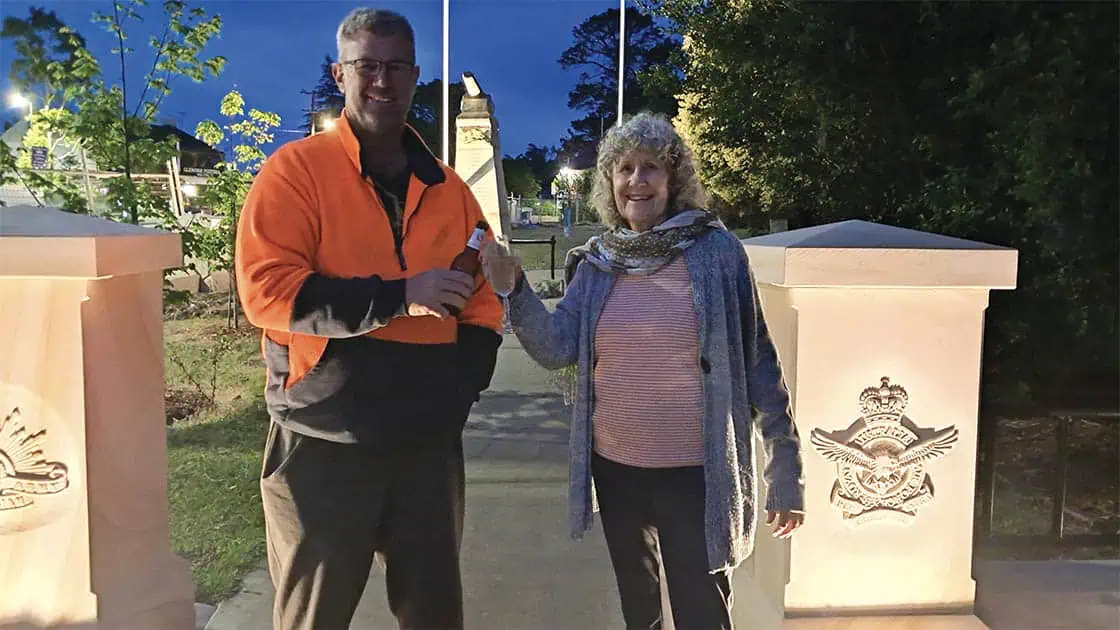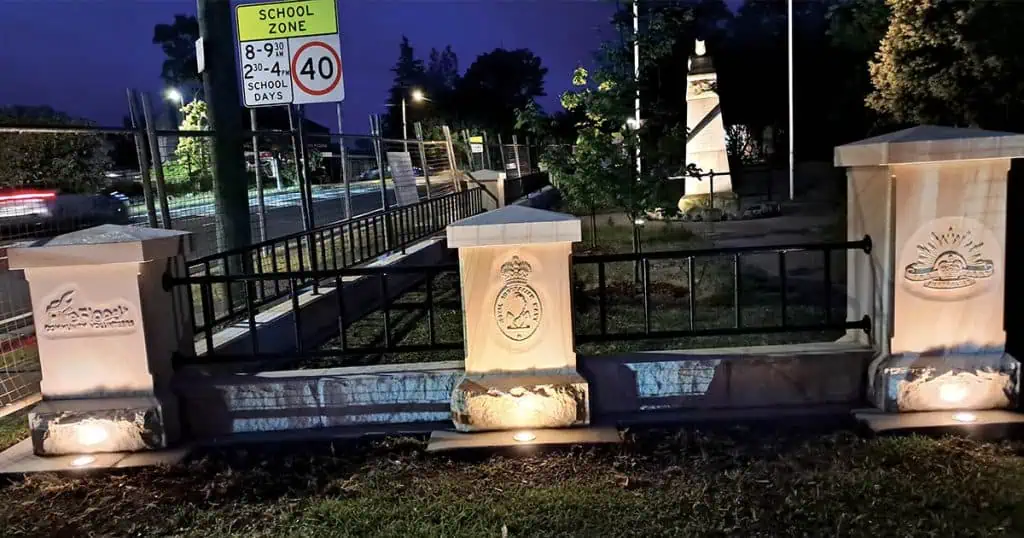
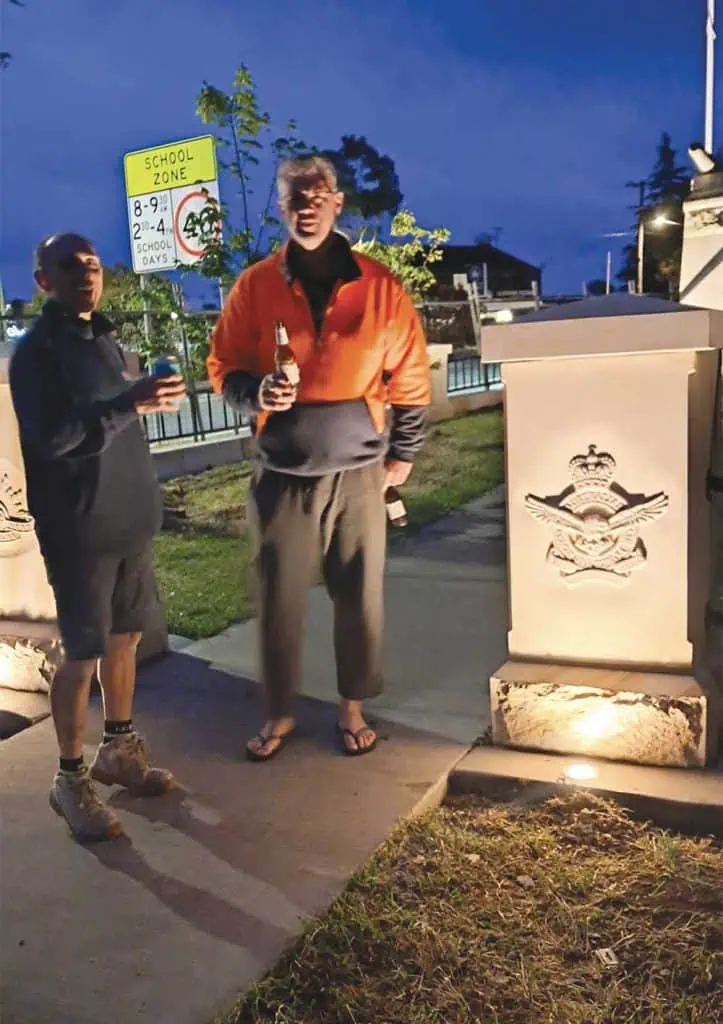

The finishing touches have finally been placed on the Ray Whiteman Heritage Fence, and as dusk settles over Glenorie, the new lighting brings the project to life in a way words can barely capture. The soft up-lights cast a warm glow across the stonework, highlighting not just craftsmanship, but the pride of a community determined to honour its past.
Local stonemason Karl from Aussie Stonemasons has left an unmistakable mark on the precinct. His sandstone carvings—detailed, textured and unmistakably tied to the region’s geology—stand as a testament to the area’s heritage. Each piece tells a fragment of Glenorie’s story, forming a visual narrative that weaves the past into the present. The fence now reads like an open-air gallery, a reminder of the families, labour and legacy that shaped the district.
In nearby Wal Buckingham Park, Hornsby Shire Council’s efforts are also coming into their own. The newly laid mower strip and turf, along with consistent watering throughout the hotter months, have transformed the space into a lush green corridor. Council’s preparation of the community pavers outside the Glenorie Memorial Hall is progressing steadily, with hopes the final touches will be completed by the year’s end—another milestone in a suburb refusing to let its community roots fade.
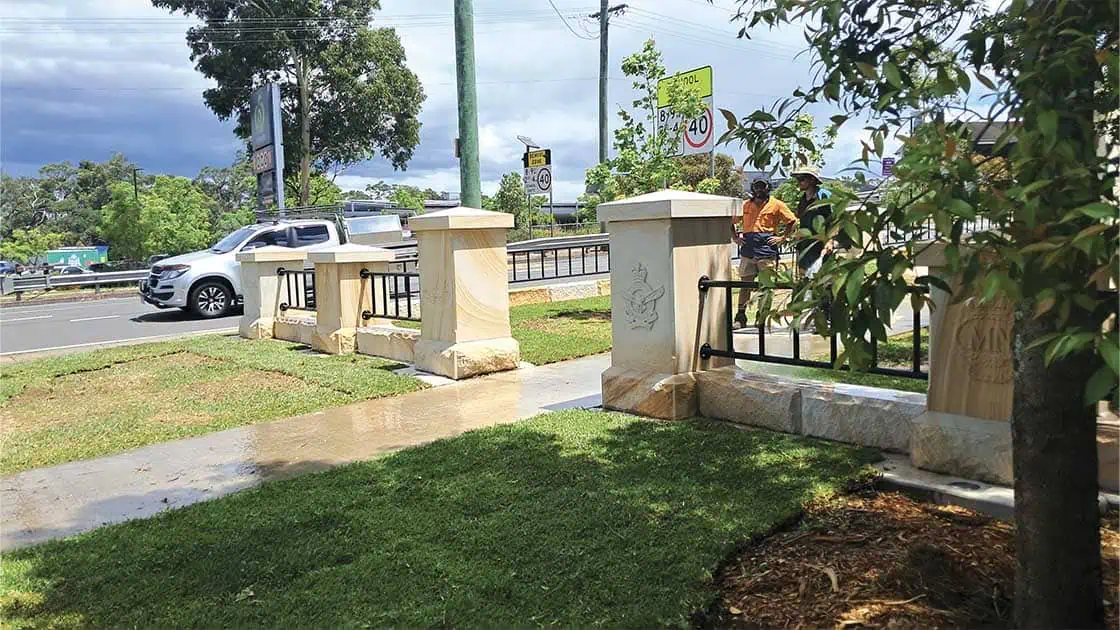
The excitement is building for what will be a major moment on the local calendar: the Official Grand Opening Day, scheduled for Sunday 15 February 2026. Residents are already being encouraged to mark it in their diaries, with a gala celebration planned to formally unveil the completed heritage precinct. Before then, the community will gather for a final event of the year—a Christmas celebration coinciding with the last General Meeting of 2025 on Thursday 11 December at the Glenorie RSL Club. Those unable to attend can join online via the Glenorie Progress Association’s website.
As Glenorie reflects on its present accomplishments, it continues to look back on the families that helped build the township—none more so than the Hughes family, whose story spans convicts, orchards, churches and community leadership.
Following on from last month’s historical recount, the narrative picks up with the eighth child of Matthew Hughes and Mary Small. Thomas Hassall Hughes, who married Eliza Spurway, moved from the Ryde area to establish an orchard at Dundas, where the couple raised nine children. Their fifth child, also named Thomas, married Fanny Neil in 1889 and the pair later relocated from Field of Mars to Glenorie around 1914.
Settling on Cairnes Road, Thomas and Fanny raised their large family while working the land. Their income came from orchard produce and from Thomas’s enduring passion—breeding, selling and training horses. His skill with horses made him a valued contributor to the district’s early infrastructure, using his teams to help construct local roads. One of his most memorable feats was transporting the Methodist Church building from Beecroft to its current Glenorie location, a remarkable task carried out using horses and a timber slide. Fannie, meanwhile, devoted herself to community life, helping establish the church and guiding local children as superintendent of the Sunday School for many years.
The Hughes children—many of whom married into other longstanding local families—grew up embedded in the rhythms of early Glenorie. Their names remain woven into the area’s history: Irene, Alfred (Jack), Maude, Herbert, William, Agnes, Allan, Neil, Frank, Elsie, Thomas and Gordon. Most spent their adult lives on Glenorie soil, running orchards, farms and sawmills along Cairnes Road, Moores Road and Harrisons Lane. As the decades unfolded, the family played a role in shaping institutions such as the Glenorie RSL and the Glenorie Co-operative, helping cement the township’s identity during the 20th century.
Generations of Hughes children passed through Glenorie Public School, becoming so central to daily life that one former principal was said to have joked, “It must be Friday—every Hughes boy is here and not working on the farm.” Fridays were market days, and work on the orchards often took precedence over lessons. It was a small anecdote that captured a much larger truth: the Hughes family helped build Glenorie from the ground up, in every sense.
As the lights now illuminate the newly completed heritage fence, the town finds itself looking forward to a celebration of the present while remembering the people who shaped its past—a fitting tribute to a community that continues to honour both.