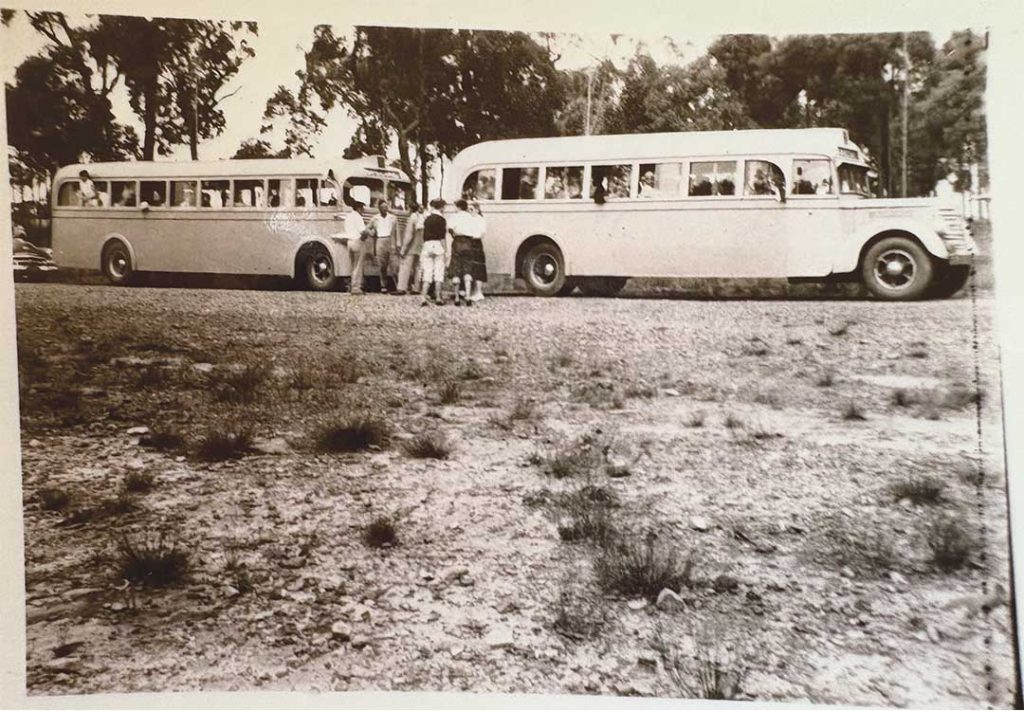
The Glenorie Bus Company, a cornerstone of the local community since the early 1920s, has a rich history that intertwines with the very fabric of Glenorie itself. Founded by George Deaman, the company began humbly, rooted in a commitment to connecting people and services in the region, and its legacy continues to shape the area today.
George’s journey started when he took over the mail run from his brother, Ray Deaman. Following Ray’s move to work for the council, George began delivering mail from Glenorie to Castle Hill using a horse and sulky. It was during this period that fate intervened; he met Phyllis Holland, who would later become his wife. Phyllis, a local girl, would walk from Evans Road in Glenhaven to Old Northern Road, carrying the mail bag from her mother’s post office, to meet George on his route. Their bond grew alongside the demand for transport in the area.
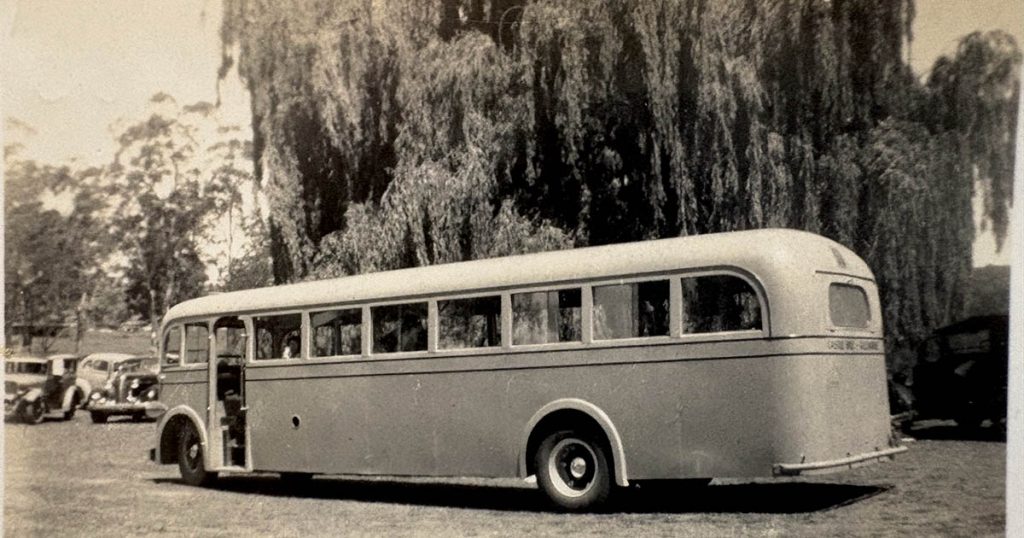
As the number of requests for transport to Castle Hill increased, George seized the opportunity before him. He applied for a bus license, invested in his first motorised bus, and thus established the first dedicated bus route from Glenorie to Castle Hill – Route No. 60. This marked the beginning of a significant chapter not only for George but for the community as well.
Initially, George’s buses ran on petrol, leading him to install a petrol tank and manual pump on his property to fuel his vehicles. He utilized Golden Fleece fuel, known colloquially at the time as benzine. The winter months presented challenges of their own, as frosty mornings necessitated inventive engine-starting techniques involving cotton wool and methylated spirits. George was not one to shy away from challenges. Instead, he embraced them, further solidifying his reputation as a dedicated and resourceful local businessman.
From the late 1920s through the 1950s, George and Phyllis expanded their business significantly, operating from a site next to the original Glenorie Post Office, now home to Glenorie Woolworths. Initially, George drove the buses himself, ensuring that service was consistent. As the company gained traction, he brought on several drivers, including notable names like Vic Bevan, Bill Roughley, Phillip Black, Mervyn Hughes, Alan Hitchcock, Mervyn Marsh, and Dennis Webb. The expansion of the routes included destinations beyond Castle Hill, reaching areas like Eastwood and others in the wider district.
The buses served a vital role in the community, connecting Glenorie residents with educational institutions and essential services not readily available in their immediate surroundings. Local school children relied on these services to access high schools in Hornsby, Carlingford, Northmead, and Parramatta. Many residents fondly recall the experience of catching the 6:50 AM bus to Dural, which would then connect with another service traversing the winding Galston Gorge to Hornsby, or hopping on a bus to Castle Hill to join yet another route to Parramatta.
George’s dedication to the local community was evident in his constant efforts to expand and improve services. He often made long trips to the Transport Department, accompanied by Phyllis, to advocate for approvals and discuss innovative ideas for enhancing public transport options. The journey from Glenorie to Roseberry involved multiple forms of transportation, including car, train, and tram—a testament to George’s unwavering commitment to his vision for community transport.
In 1952, following one of those arduous trips, George successfully launched daily bus services to Eastwood Station. This service featured no pickups or set-downs between Rogan’s Hill and Eastwood, ensuring that they did not overlap with existing routes. His foresight and innovation were instrumental in meeting the commuting needs of local residents.
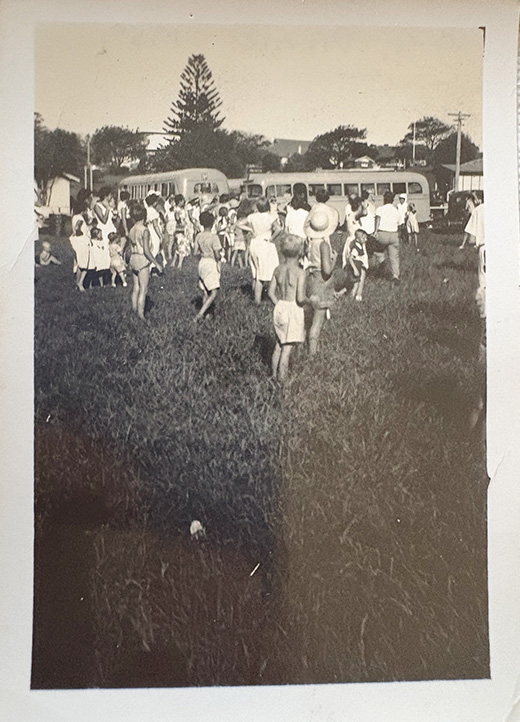
Beyond his role as a businessman, George was a deeply religious man known for his generosity. His contributions to the community extended to providing buses and drivers for various charitable events aimed at fundraising for St Jude’s Dural Parish. The buses took patrons on excursions to destinations across greater Sydney, such as Bobbin Head, Kiama, and the magnificent Blue Mountains, with stops often including the Church of England Grammar School, where Rev. Pitt Owen, previous rector of St Jude’s, was headmaster.
The Glenorie Bus Company wasn’t just about transportation; it encapsulated the spirit of the community. Buses were frequently hired for outings by local churches, with services provided for Sunday school picnics traveling to scenic spots like Bungool, now the site of Riverside Oaks Golf Club, and the Northern Beaches. George even recognized the need for weekend services, adding routes to transport moviegoers to the Castle Hill theatre and later to the Eastwood Odeon theatre.
In addition to managing the bus company, George was known for his remarkable ability to deliver newspapers along his route, tossing them accurately from the bus directly to the homes of residents. He also played a role in the local wedding scene, utilizing his black Chrysler cars to transport couples to their nuptials.
The Glenorie community was not just a business opportunity for George; it was his home, a place he deeply cared about and contributed to in countless ways. Known for his sayings, he left a lasting impression on locals. Aline Muscio remembered him often exclaiming, “Quick’s the word and sharp’s the motion,” whenever he alighted from the bus, while his daughter, Elizabeth, fondly recalled his response to inquiries about racing: “The human race,” he would quip.
Phyllis, too, played an integral role, not only as George’s partner in life but also as a qualified nurse who trained from 1925 to 1929. Her generosity and kindness were well-regarded in the community, complementing George’s work with her own contributions.
Together, George and Phyllis Deaman’s legacy continues to resonate within the Glenorie community. Their dedication to service and the creation of the Glenorie Bus Company paved the way for future generations, establishing deep connections between families and fostering a sense of unity and togetherness. As the Ray Whiteman Heritage Fence nears completion, honoring such families and their contributions to Glenorie, it’s a reminder of how some stories are woven into the hills and hearts of the communities we hold dear.
If you want to Have Your Say directly to both Councils and the Government or discuss your thoughts with us at the Glenorie Progress Association meetings, come to the Glenorie RSL Club at 7:15 pm on the second Thursday of each month. Join the Association at only $20, $40 for 2 years or $80 for 5 years. Go to https://www.glenorieprogress.org/membership Or preferably join by Direct credit (no fees): “The Glenorie Progress Association Inc”: BSB 633 000 Account #: 159 557 131
You can contact us at [email protected] or call 0418 432 587.